Featured Articles
- 9 Little-Known Technological Breakthroughs That Revolutionized Automotive Safety Standards Over Time
- Forgotten Champions: The Rise and Fall of Electric Cars in the Early 20th Century
- Forgotten Gears: Unearthing the Bizarre Innovations That Shaped Early Automobile Design
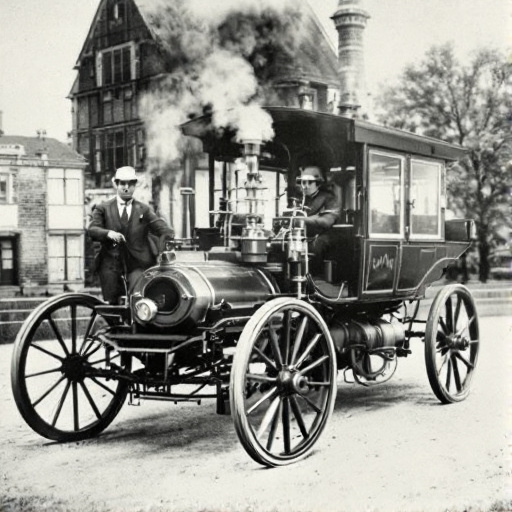
- Forgotten Innovations: How 19th Century Steam Cars Inspired Today's Electric Vehicles
- Ghost Cars: The Eerie Legacy of Abandoned Automobiles in America's Automotive History
9 Little-Known Technological Breakthroughs That Revolutionized Automotive Safety Standards Over Time
9 Little-Known Technological Breakthroughs That Revolutionized Automotive Safety Standards Over Time
9 Little-Known Technological Breakthroughs That Revolutionized Automotive Safety Standards Over Time
1. The Crumple Zone Concept
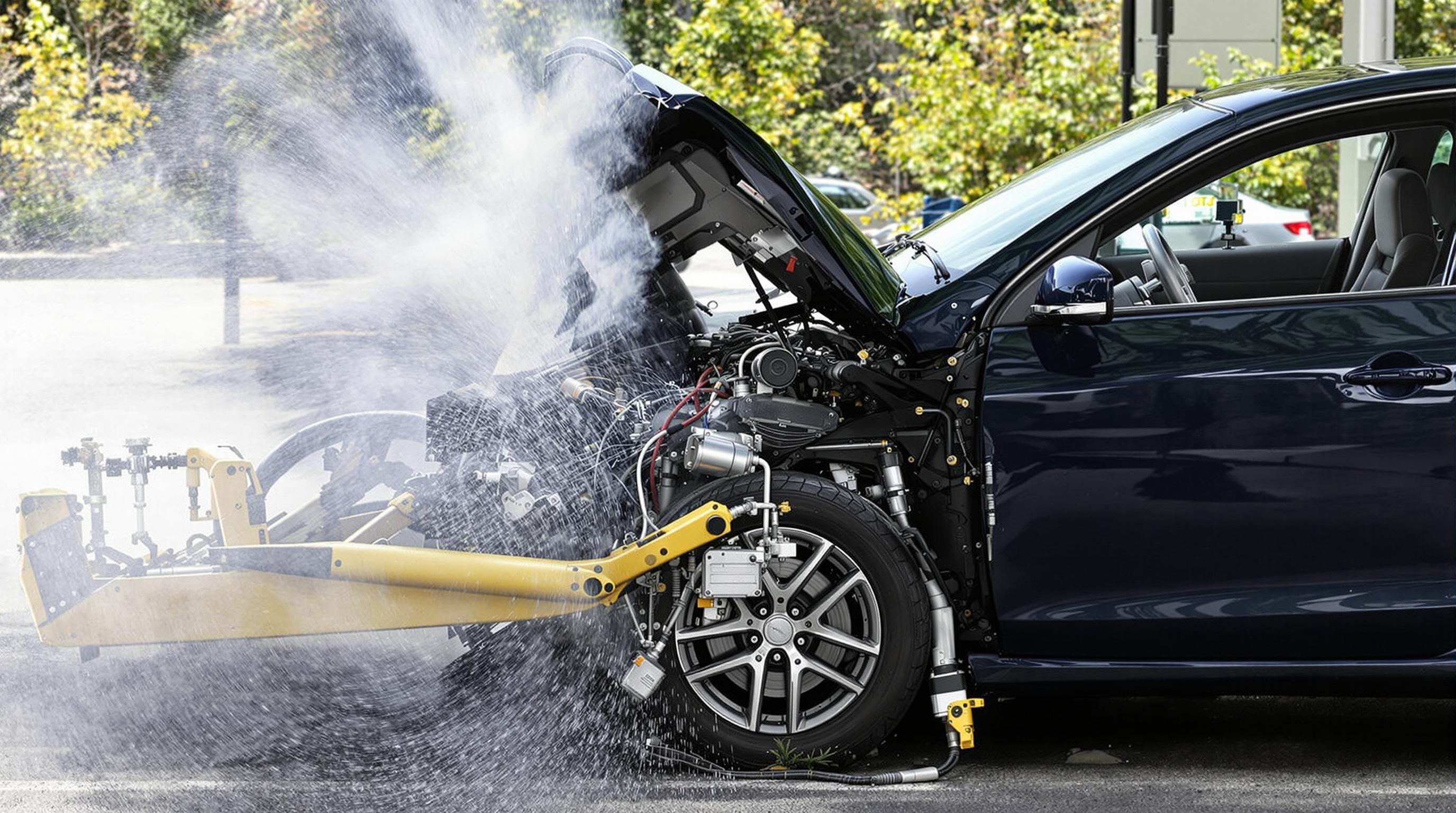
First introduced by Mercedes-Benz engineer Béla Barényi in the 1950s, the crumple zone is a structural feature designed to absorb collision energy by deforming during a crash. This innovation helped to reduce the force transmitted to occupants, significantly improving passenger survival rates. The idea was groundbreaking because it challenged the then-prevailing notion that cars should be rigid and unyielding.
By incorporating areas of controlled deformation, manufacturers could now better manage energy distribution during high-impact collisions. This technological advance swiftly influenced global automotive safety regulations, prompting other manufacturers to adopt similar designs. Today, crumple zones remain a standard aspect of vehicle safety engineering.
According to a study by the National Highway Traffic Safety Administration (NHTSA), vehicles equipped with effective crumple zones reduce fatality risk by approximately 20%, highlighting the enduring impact of Barényi’s vision.
Source: NHTSA Crashworthiness Report, 2018.
2. Laminated Safety Glass
Laminated safety glass was an important breakthrough in protecting vehicle occupants and pedestrians from injury during collisions. Developed by the French chemist Édouard Bénédictus in 1903, this glass is composed of two layers of glass with a plastic interlayer, which holds shards together if broken. This prevents dangerous glass fragments from flying inside the vehicle on impact.
The widespread adoption of laminated glass in windshields dramatically lowered the incidence of facial injuries and ejections during accidents. Besides safety, laminated glass also improved durability and noise insulation in vehicles, enhancing overall ride quality. Its success encouraged research into other safety materials for automotive use.
Many governments worldwide have mandated laminated glass in windshields, recognizing its ability to save lives and reduce injuries. This requirement remains a cornerstone of modern automotive safety standards.
Source: Society of Automotive Engineers (SAE), Safety Glass Research, 2019.
3. Antilock Braking Systems (ABS)
Antilock Braking Systems (ABS) were developed to prevent wheels from locking during emergency braking, allowing drivers to maintain steering control. Although initial concepts emerged in the 1920s for aircraft, ABS technology was adapted for automobiles in the 1970s and 1980s. This system uses sensors and computer controls to modulate brake pressure dynamically.
ABS significantly reduces skidding and improves vehicle stability during sudden stops, decreasing the likelihood of collisions due to loss of control. By maintaining tire traction, ABS helps drivers avoid obstacles more effectively during emergencies. It is now a mandatory feature in many countries and is credited with saving thousands of lives annually.
A 2014 report by the Insurance Institute for Highway Safety (IIHS) found that ABS-equipped vehicles had about a 35% reduction in fatal single-vehicle crashes, underscoring its value as a safety enhancement.
Source: IIHS Status Report on ABS, 2014.
4. Side-Impact Airbags
Side-impact airbags were introduced as an innovative safety feature to protect occupants in lateral collisions, which can cause severe injuries due to limited crumple zones on the vehicle’s sides. First appearing in the mid-1990s, side airbags deploy rapidly from the seat or door panels to cushion the torso or head during side crashes.
This advancement drastically reduced the fatality rate in side-impact crashes, which traditionally had higher injury risks compared to frontal collisions. Side airbags work in conjunction with reinforced door beams and other structural safety measures to provide comprehensive protection. Over time, head-protecting curtain airbags were added for further coverage.
Studies by the Highway Loss Data Institute indicate that side airbags reduce driver death risk by up to 37% in side-impact crashes, making them a vital component of modern vehicle safety systems.
Source: Highway Loss Data Institute, 2018.
5. Tire Pressure Monitoring Systems (TPMS)
While tire pressure has long been recognized as critical for vehicle safety, the introduction of Tire Pressure Monitoring Systems (TPMS) in the late 1990s and early 2000s provided real-time alerts to drivers about under-inflated tires. This early warning helps maintain optimal tire pressure, which is essential for vehicle handling, fuel efficiency, and preventing blowouts.
TPMS uses sensors either inside the tire or at the wheel to measure pressure and transmit data to the vehicle’s dashboard. By alerting drivers promptly to pressure issues, TPMS reduces the risk of accidents caused by tire failure or poor performance. Regulatory bodies in the US and Europe have since mandated TPMS on new vehicles.
The NHTSA reports that TPMS-equipped vehicles show fewer tire-related crashes, contributing to an overall enhancement in road safety.
Source: NHTSA Technical Report on TPMS, 2010.
6. Electronic Stability Control (ESC)
Electronic Stability Control (ESC) systems emerged in the late 1990s as an advanced safety technology to help drivers maintain control during extreme steering maneuvers. ESC automatically applies brakes to individual wheels and modulates engine power to prevent skidding or loss of control, especially on slippery roads.
The innovation was hailed for its ability to reduce rollovers, spinouts, and other common causes of single-vehicle crashes. It represents a significant leap beyond traditional braking systems by using sensors and computing power to analyze vehicle dynamics continuously. ESC has since been widely adopted and is often standard on modern vehicles.
A landmark 2011 study by the NHTSA showed that ESC decreases fatal single-vehicle crashes by 49% and fatal rollover crashes by 59%, illuminating its considerable life-saving potential.
Source: NHTSA ESC Effectiveness Study, 2011.
7. Adaptive Cruise Control (ACC)
Adaptive Cruise Control (ACC) enhanced traditional cruise control by using radar and camera sensors to maintain a safe following distance from vehicles ahead automatically. This system adjusts throttle and braking inputs without driver intervention, easing long drives and reducing rear-end collisions caused by sudden speed changes.
Introduced commercially in luxury vehicles in the early 2000s, ACC has become increasingly common across all vehicle classes. ACC also serves as a foundation technology for more advanced driver assistance systems and autonomous driving developments. It plays an important role in improving driver comfort and safety.
Studies indicate that ACC reduces the frequency of driver braking events and rear-end collisions, contributing to smoother traffic flow and fewer accidents. The IIHS continues to evaluate ACC’s effectiveness in conjunction with other safety technologies.
Source: IIHS Research on ACC, 2019.
8. Blind Spot Detection Systems
Blind Spot Detection (BSD) systems provide drivers with alerts about vehicles located in adjacent lanes that may be difficult to see using standard mirrors. Using radar or ultrasonic sensors, BSD monitors areas beside and behind the car, warning drivers with lights or sounds when lane changes may be unsafe.
Although some forms of lane-awareness technology existed earlier, BSD became popular in the late 2000s as sensor technology advanced and became more affordable. This enhancement reduces collisions during lane changes, one of the more common types of traffic accidents. BSD aids driver awareness and promotes safer maneuvering in dense traffic.
A 2017 Insurance Institute for Highway Safety study found a 14% reduction in police-reported lane-change crashes in vehicles equipped with BSD, emphasizing its contribution to roadway safety.
Source: IIHS BSD Effectiveness Study, 2017.
9. Pedestrian Detection and Automatic Emergency Braking
Among the most recent breakthroughs is the integration of pedestrian detection with Automatic Emergency Braking (AEB). These systems use cameras, radar, and lidar to identify pedestrians and other vulnerable road users, alerting the driver or automatically applying brakes to avoid or mitigate collisions. This innovation aims directly at reducing urban fatalities involving pedestrians.
Introduced in the 2010s, pedestrian AEB is now included in many new vehicle safety packages, reflecting the growing focus on vulnerable road users. Advances in sensor technology and artificial intelligence continue to improve system reliability and response times. These systems represent a shift toward proactive accident prevention rather than reactive protection.
Recent research from the European New Car Assessment Programme (Euro NCAP) demonstrates that pedestrian AEB can reduce pedestrian collisions by up to 40%, marking it as a critical technology in future urban mobility safety.
Source: Euro NCAP Pedestrian Safety Report, 2021.
Conclusion
Over time, numerous lesser-known technological breakthroughs have collectively shaped modern automotive safety standards. Many innovations began as experimental or luxury features before becoming widespread and mandatory, improving protection for drivers, passengers, and pedestrians alike.
From structural engineering advancements like crumple zones and laminated glass to high-tech sensor systems such as ESC and pedestrian detection, each breakthrough contributes uniquely to reducing accidents and saving lives. The ongoing evolution of automotive safety underscores the industry's commitment to innovation and public welfare.
Understanding these technologies helps appreciate the complexities behind the everyday safety features in vehicles and encourages continued support for research and development in this vital area of transportation.
Related Articles